Alabama Election Day is coming up (Nov. 3rd) and we’re going to get into some political education. Before we start, let me be very clear: I’m not going to tell you who to vote for. I’m also not going to tell you which party you should lean towards, because that’s not my job, that is yours. What we are going to do in this post is go over the data and the evidence surrounding this election so that you can make an informed decision come Election Day.
Six Issues Shaping Alabama’s Future
Voting rights and political representation
Criminal justice and prison accountability
Education
Healthcare
Economic opportunity and ownership
Civil rights and government accountability
Disclaimer: Certain selections for the election are based on your specific location. To find your sample ballot based on your district, click HERE:
We’ve all heard the coined term within our community when it comes to voting that, “Our votes don’t matter.” That’s a statement that requires examination. Our History tells a very different story that most fail to adhere to, as it shows our rights to vote were aggressively fought for. Centuries of advocating for our own voices and our autonomy, whether it be from an economic or political standpoint, are to be understood and respected.
So whether you’re politically informed or just starting to learn how elections work, consider this your comprehensive review. It’s important to learn the significance of voting because it allows one to examine the institutions, officials, and polices that shape every day life. Knowing you can vote is one thing, understanding the power (and limits) of that vote is another.
Moving forward, we’re going to dissect and outline the six issues we’ll use for every race, then move office by office. We’re then going to go over each state candidate, their specific role, and their proposals/plans for the Alabama collective if they’re ever to be elected for said role. We’re also going to cover the selected amendments as well. All data provided will be sourced below for further independent research.
Discussing the issues in conjunction with each candidate’s proposed actions can affect our overall benefits and rights within these systems. Certain policies can potentially alter or restrict our access to resources across all concerns discussed.
In short: Choosing not to vote means giving up your opportunity to participate in that particular election, while those elected will still make decisions affecting your community.
Voting rights and Political Representation: This centers on your right and ability to vote, how districts are drawn and whether election rules make voting truly accessible. We can examine data such as voter turnout percentages and demographics by age, race, location, gender, disability and income to better identify participation gaps and understand why current policies create barriers that may negatively impact political representation. The data provided reveals that while yes, Black Alabamians do participate in elections by substantial numbers, the turn out gap is still persistent, and the way districts are drawn can affect both voter representation and participation.
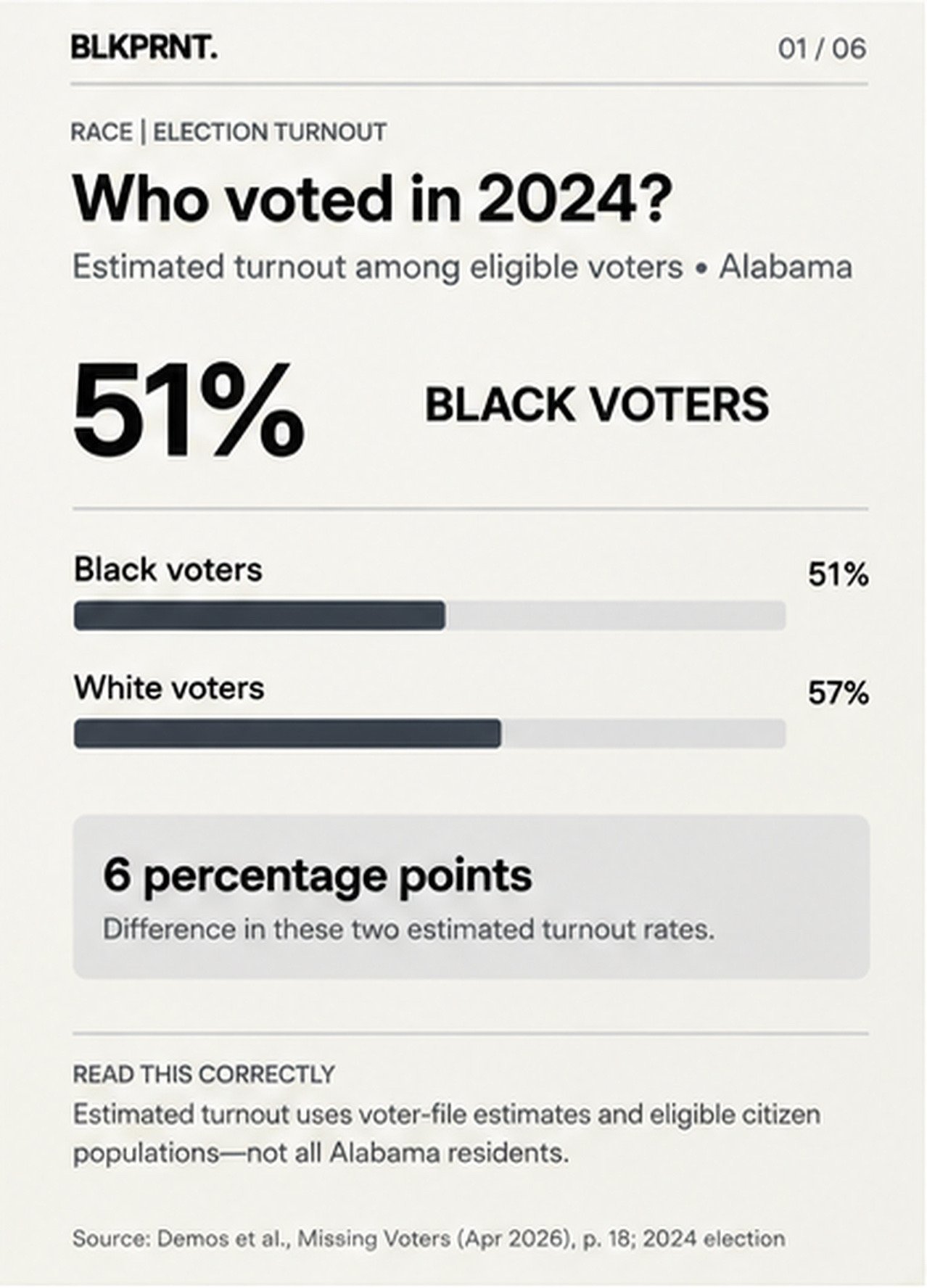
Alabama records show more than half a million ballots cast by black voters in 2024, while the white & black voter turnout out reported by the Brennan Center shows a gap stretch of 9 to 13 points from 2022-2024. (Cited below)
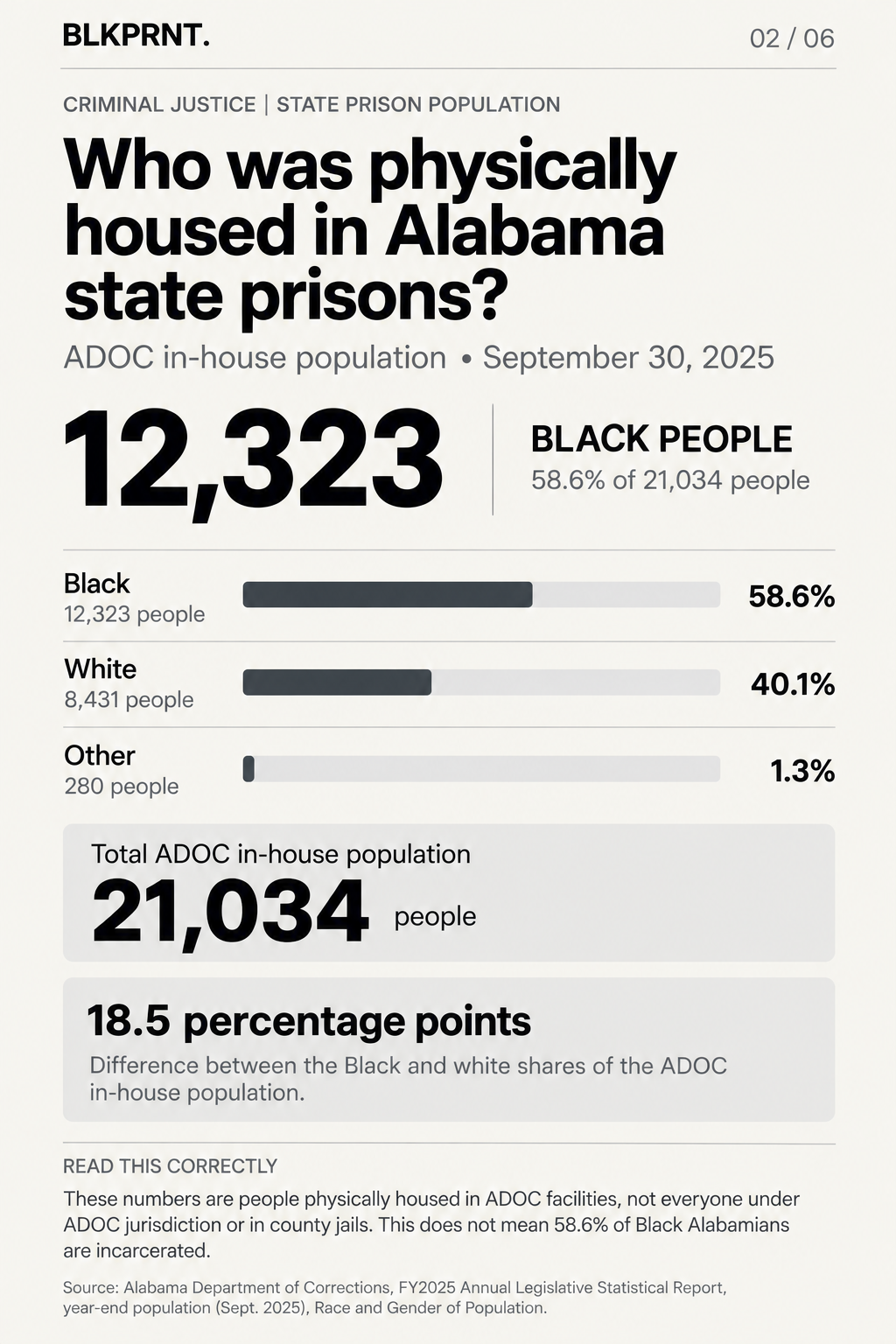
Criminal Justice and Prison Accountability: How prisons are overseen, how laws are enforced and what reforms an office can deliver. Data such as Incarceration rates, conditions, budgets and oversight findings based on general demographics paint a bigger picture of the system as well as the candidates attached to this issue. Their proposals could affect communities in various ways. Reports show that black Alabamians make up the larger share of the prison population than of the state population over all, meaning: Black residents are disproportionately represented in the state corrections system.
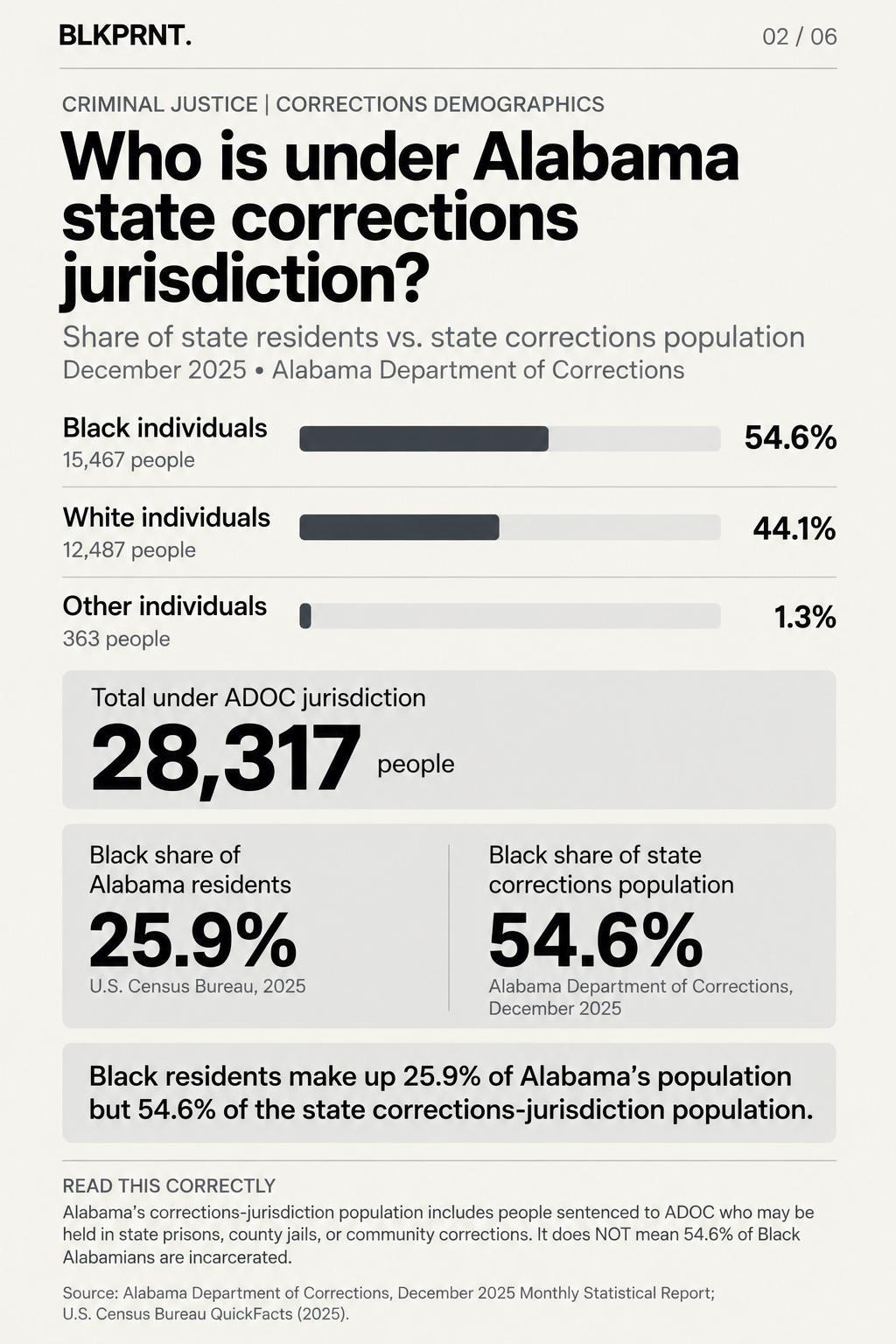
While Black residents make up approximately 26% of the Alabama population, they account for roughly 54% of its corrections population.
[ 1.2% of Alabama’s Black population is under state corrections jurisdiction, although not all are physically incarcerated]
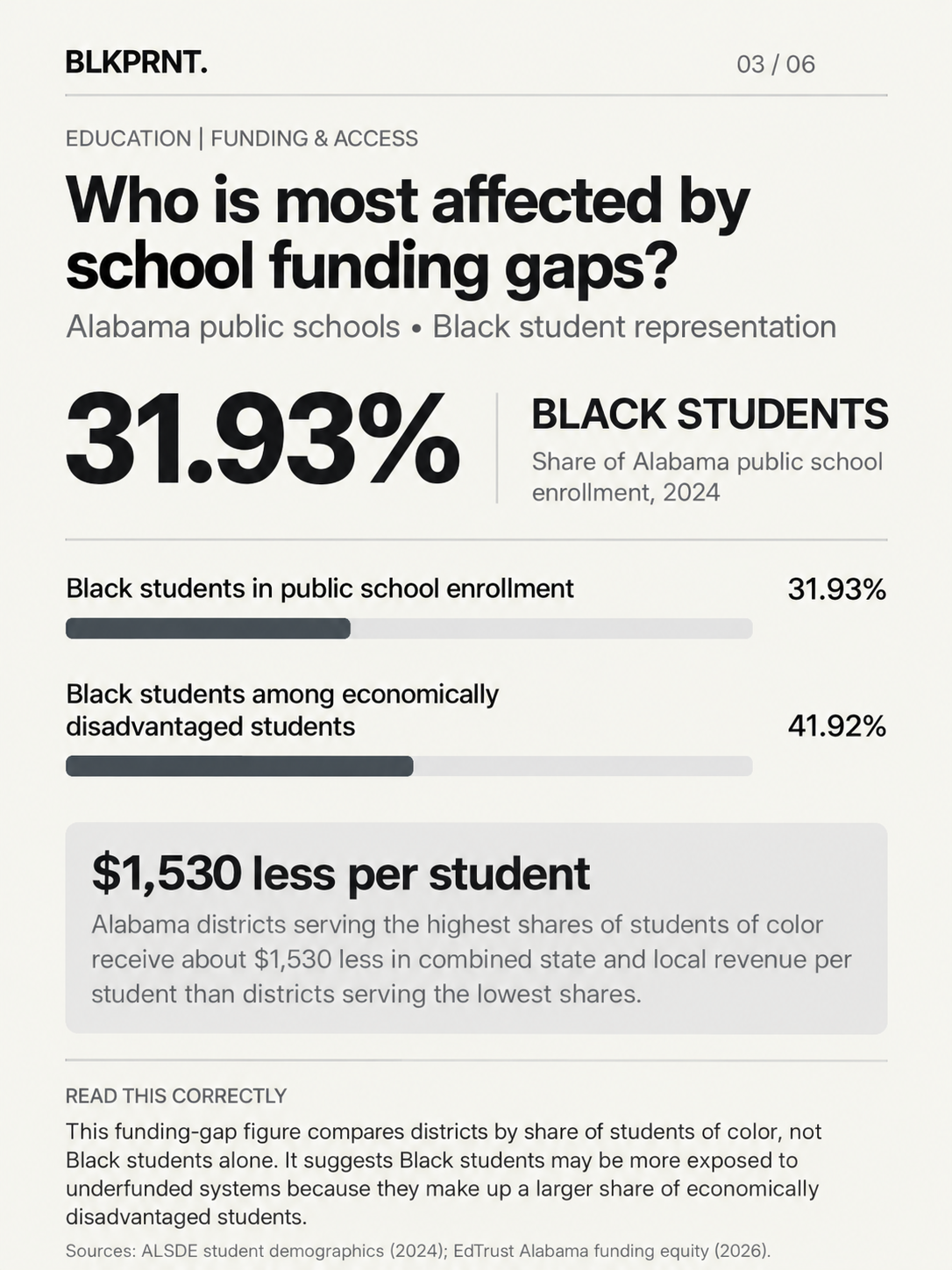
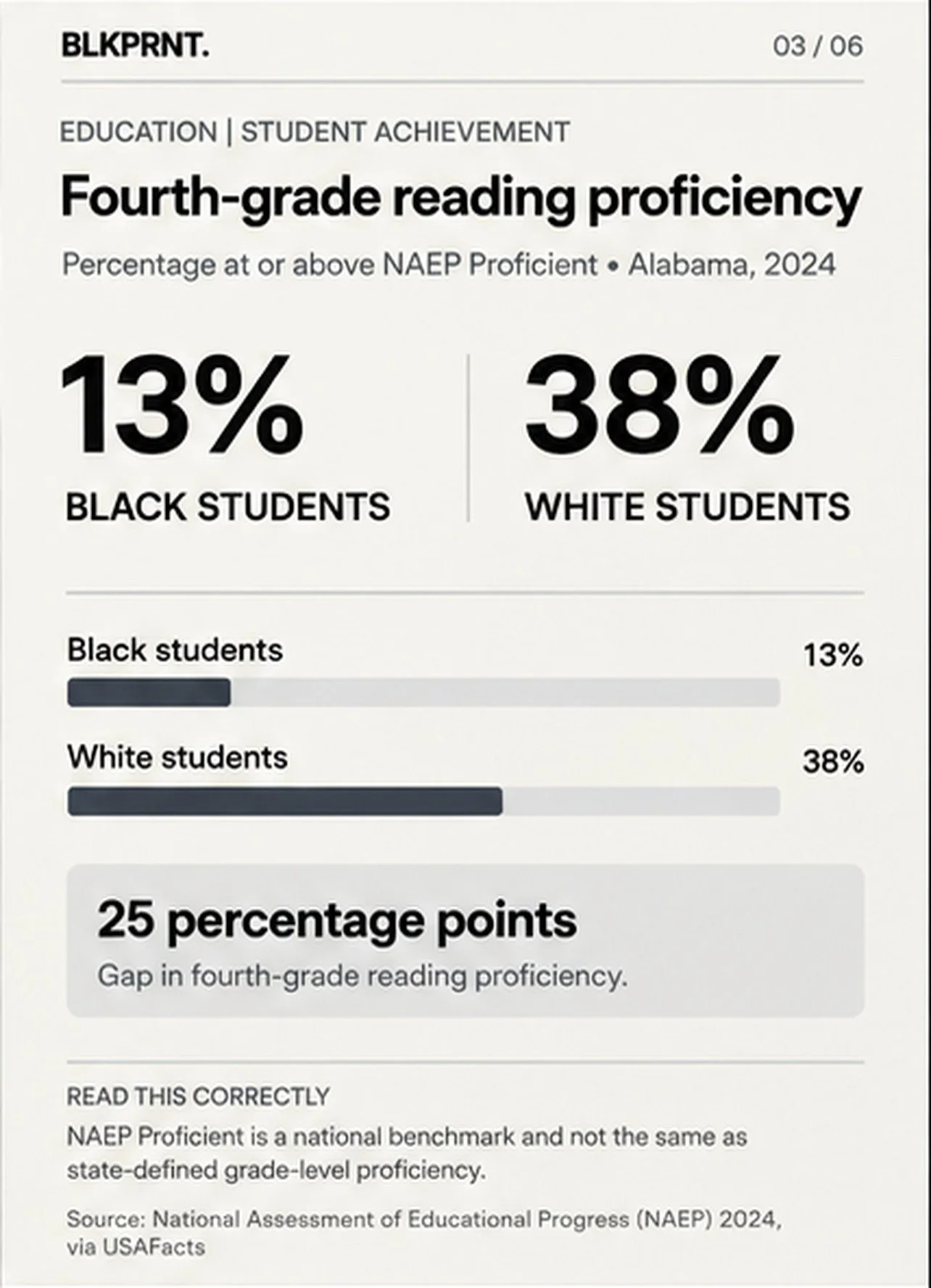
Education: What each board of education actually controls and how schools receive funding. In Alabama, the BOE sets statewide policies, and the state legislature determines education funding through the Education Trust Fund budget. The State Treasurer, an executive branch official, safeguards state funds, but does not directly determine how much funding each school receives.The district Boards of Education are the entities directly responsible for how that money gets spent within their schools. So essentially, schools do receive funding, but different schools can receive different levels of funding. They have significant control, not unlimited discretion. The state now publishes school-by-school spending figures which lets us look at those numbers, but spending does not always equal flexible funds.
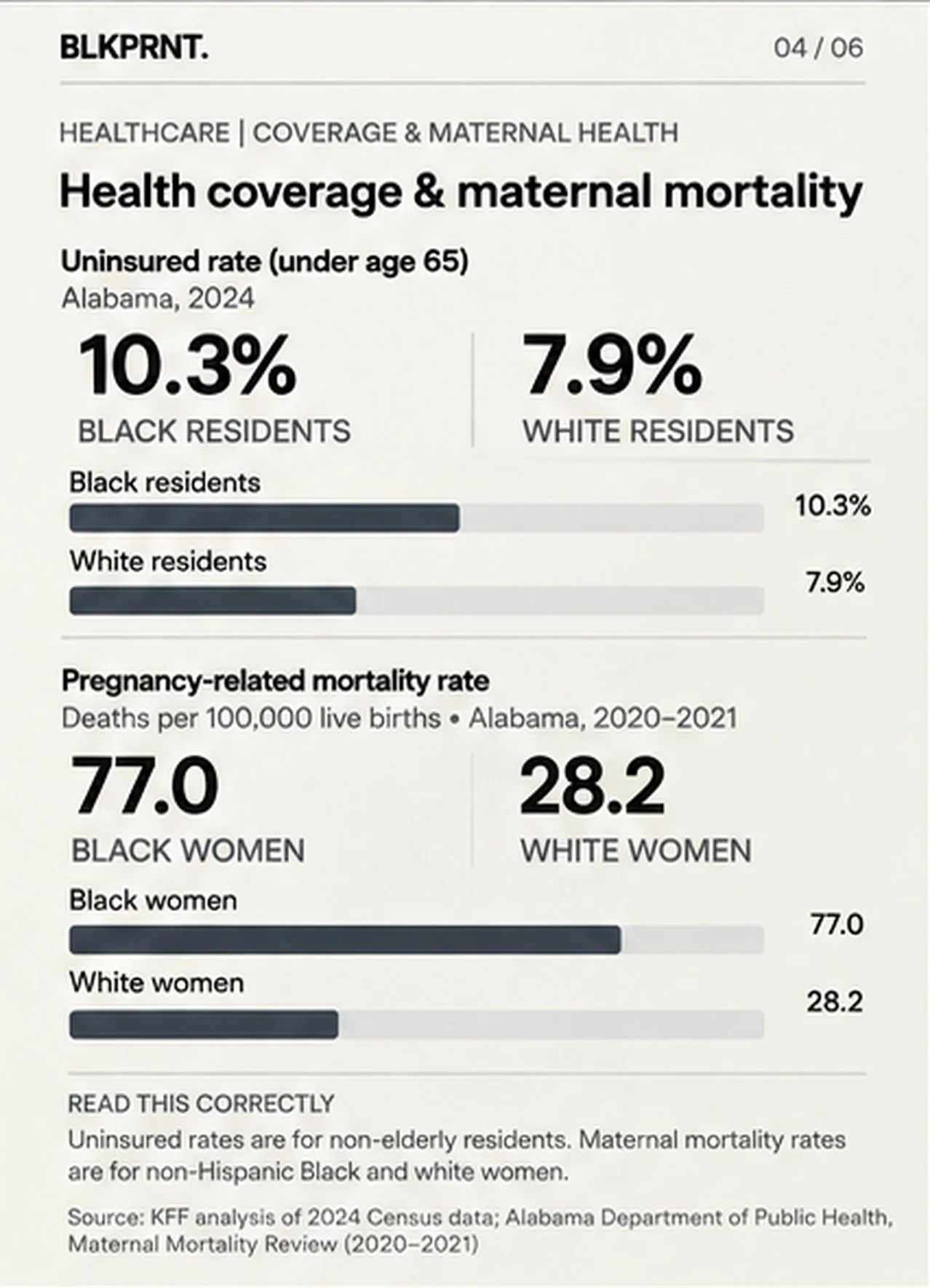
Health Care: A concerns on healthcare coverage & affordability, mortality rates, healthcare staffing and medical services available to Alabama residents. Who has access to adequate healthcare and who faces barriers? Proposed polices can alter those impacted.
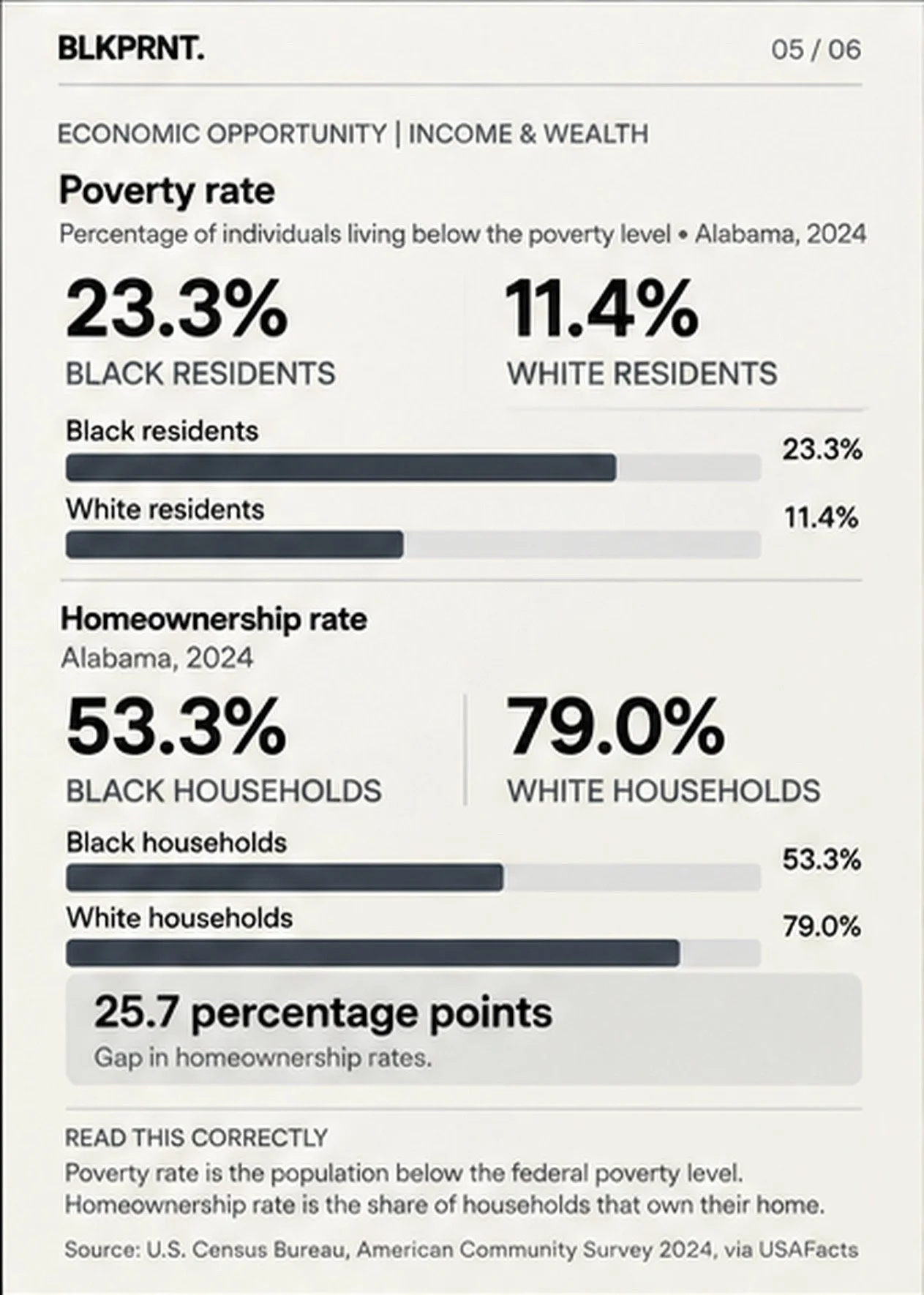
Economic Opportunity and ownership: Concerns housing affordability, earned income, ability to establish businesses, own property, and build financial stability.
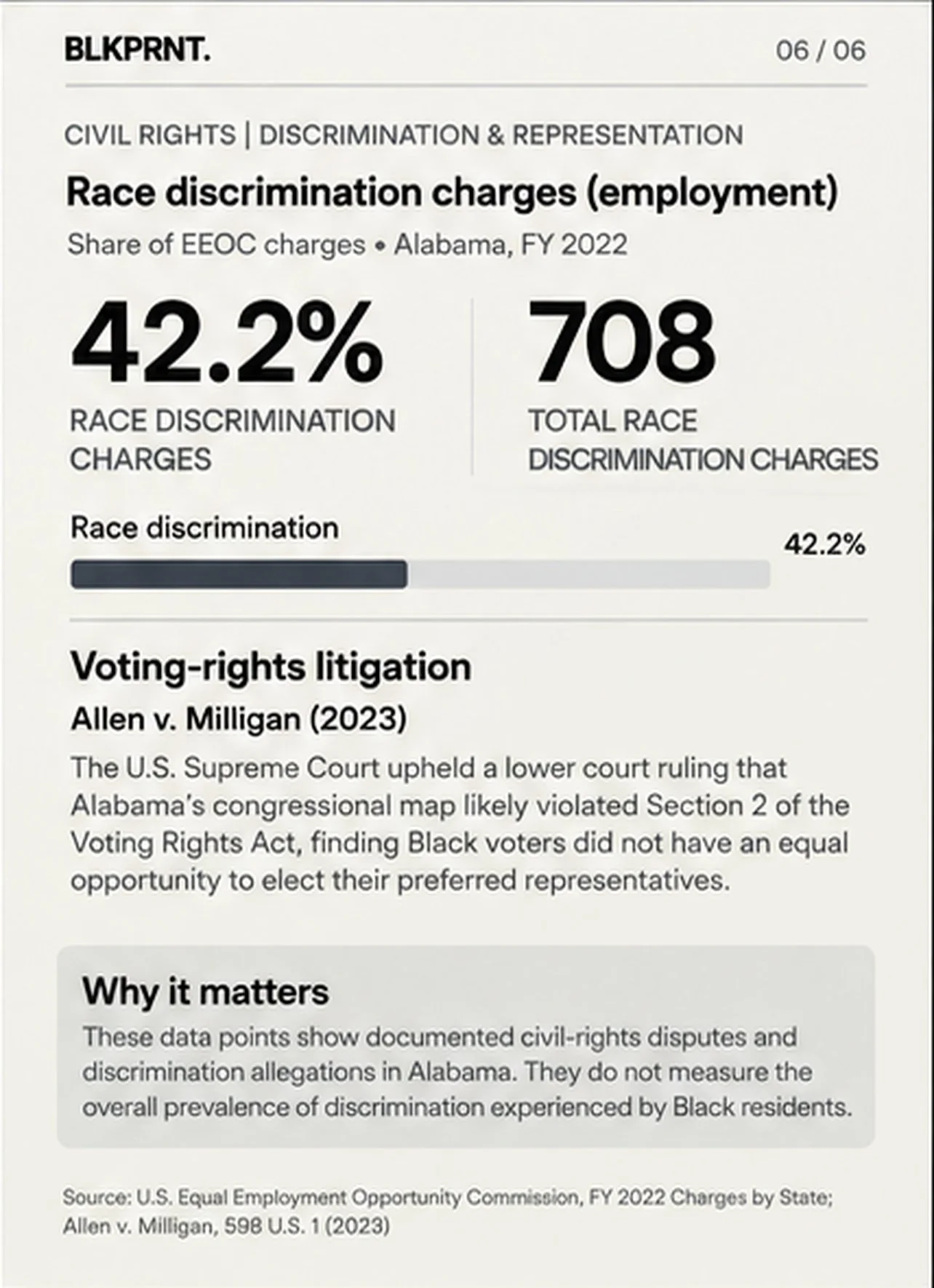
Civil Rights and Government accountability: Concerns the people’s protections that ensure equal rights under law. Government accountability concerns how elected officials and public institutions are held responsible for their actions in making the decisions that regard everyone’s rights. Are the existing protections being enforced and respected? How are violations addressed and what authority do these elected officials have to strengthen or alter these systems?
AUTHORITY: Who has it?
In order to compare and contrast major candidates and their proposals in conjunction with these issues, we first need to look at what roles within the offices they’re seeking. (Yes, you will be getting a history refresher).
OFFICE:
Governor - proposes budgets, oversees executive agencies, appoints officials and signs or vetoes legislation
Lt. Governor - Presides over state Senate, has the power to influence legislative priorities, but does not independently control agencies or school funding.
State Legislators: They pass the laws, appropriate education and healthcare funding. They also have the power to change tax and criminal justice policies.
Attorney General: Can enforce and defend laws of the state. They have the authority to lead investigations and handle protections of the consumer (you).
Secretary of State: They have the power to administer election responsibilities statewide, and handle business registrations, but they cannot independently rewrite voting laws.
State BOE (Board of Education): Oversees statewide education policies and can appoint the state superintendent.
U.S. Senator: Vote on federal legislation, funding, and judicial confirmations and protections at the national level —they cannot govern the budget of the state.
Roles are important, and it’s crucial to know everyone’s role within a governed room.
A governor can advocate for Medicaid expansion, but can’t guarantee that every step on the financial or legislative level can fallow through with said expansion.
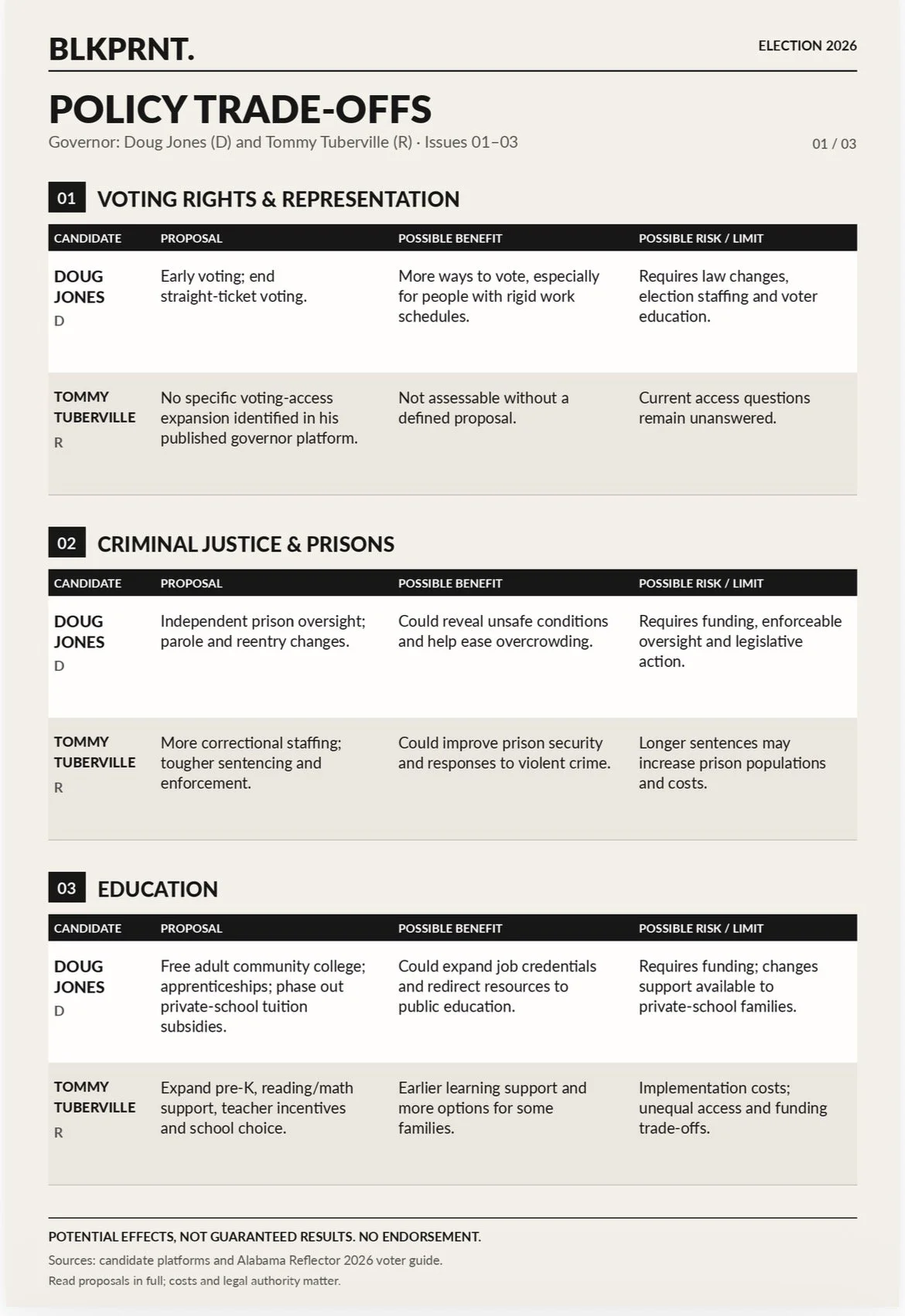
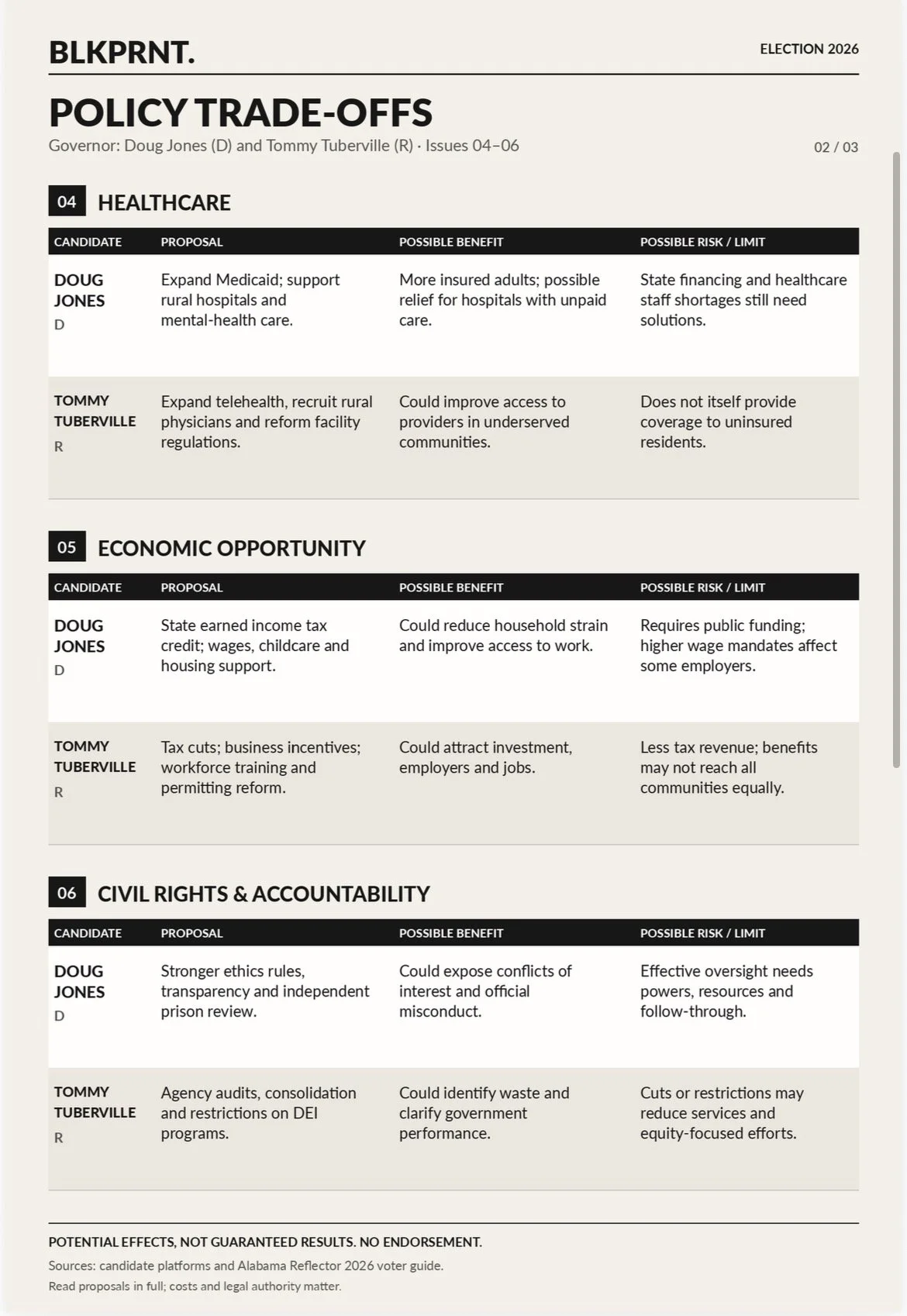
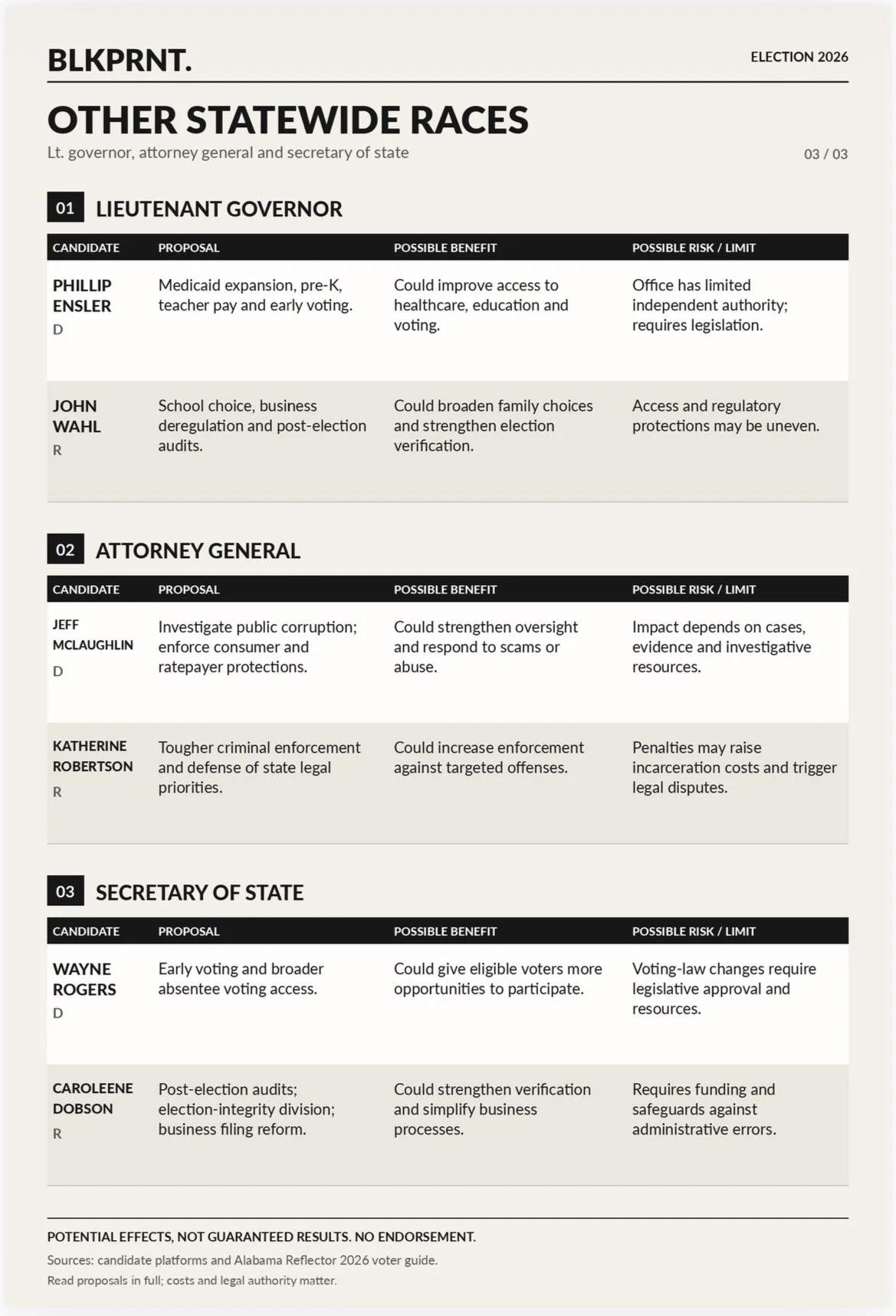
PROPOSAL BREAK DOWN: Dissecting major candidates, their proposals and how it impacts each issue.
Disclaimer: Understanding the comparison: This chart summarizes candidates’ publicly stated proposals and their potential benefits and drawbacks. It does not constitute an endorsement. Outcomes depend on funding, legal authority, implementation, and legislative cooperation. Readers are encouraged to review each candidate’s full platform and consider how the proposals may affect their communities.
Alabama Constitutional Amendments To Consider: YES OR NO?
Amendment 1 - Lieutenant Governor & Legislative pay:
Question: Should Alabama elect a replacement lieutenant governor when the office becomes vacant early in a term, while also changing how legislative leaders’ salaries and Senate travel expenses are approved?
Amendment 2 - County School Consolidation
Question: Should neighboring county school districts be allowed to voluntarily merge under a new process that includes an impact study and an opportunity for voters to challenge the merger?
Amendment 3 - Pledge of Allegiance & Student-led Prayer
Question: Should Alabama’s Constitution require public schools, to adopt polices providing for a voluntary daily Pledge of Allegiance and allowing student-led, student-initiated prayer?
Amendment 4 - National Anthem
Question: Should Alabama’s Constitution require public schools to play or perform the national anthem at least once a week?
THINGS TO CONSIDER BEFORE YOU VOTE
Political candidates shouldn’t be evaluated by party affiliation or campaign promises alone. Their policies, positions, and the authority they would hold all require careful consideration. No candidate is perfect, but understanding the potential consequences of their decisions is essential.
For many within the Black community, government distrust isn’t without reason. Generations of slavery, disenfranchisement, and institutional harm have left lasting consequences. But history also tells another story: Our ancestors did not simply accept the conditions imposed upon them. They organized, resisted, and fought to escape conditions that many today would never imagine going through themselves.
The purpose of this report is not to tell you what decision to make. It’s to provide the information necessary to question, examine, and understand the choices before you.
Knowing you can vote is one thing. Understanding the power—and limitations—of that vote is another.
Your vote. Your decision.
BLKPRNT.| Sources
Data Findings by Issue
Voting Rights and Political Representation:
Alabama Secretary of State — 2024 Participation by Race-
Criminal Justice
Education
Alabama Department of Revenue CHOOSE Act —
Healthcare
Alabama Department of Public Health — Maternal Mortality Report —
Economic Opportunity
Civil Rights & Accountability
Candidate Platforms & Policy Proposals
Alabama Reflector — 2026 General Election Voter Guides
Tommy Tuberville — Golden Age Playbook, October 22, 2026
