The Black Dollar
November 12th, 2025
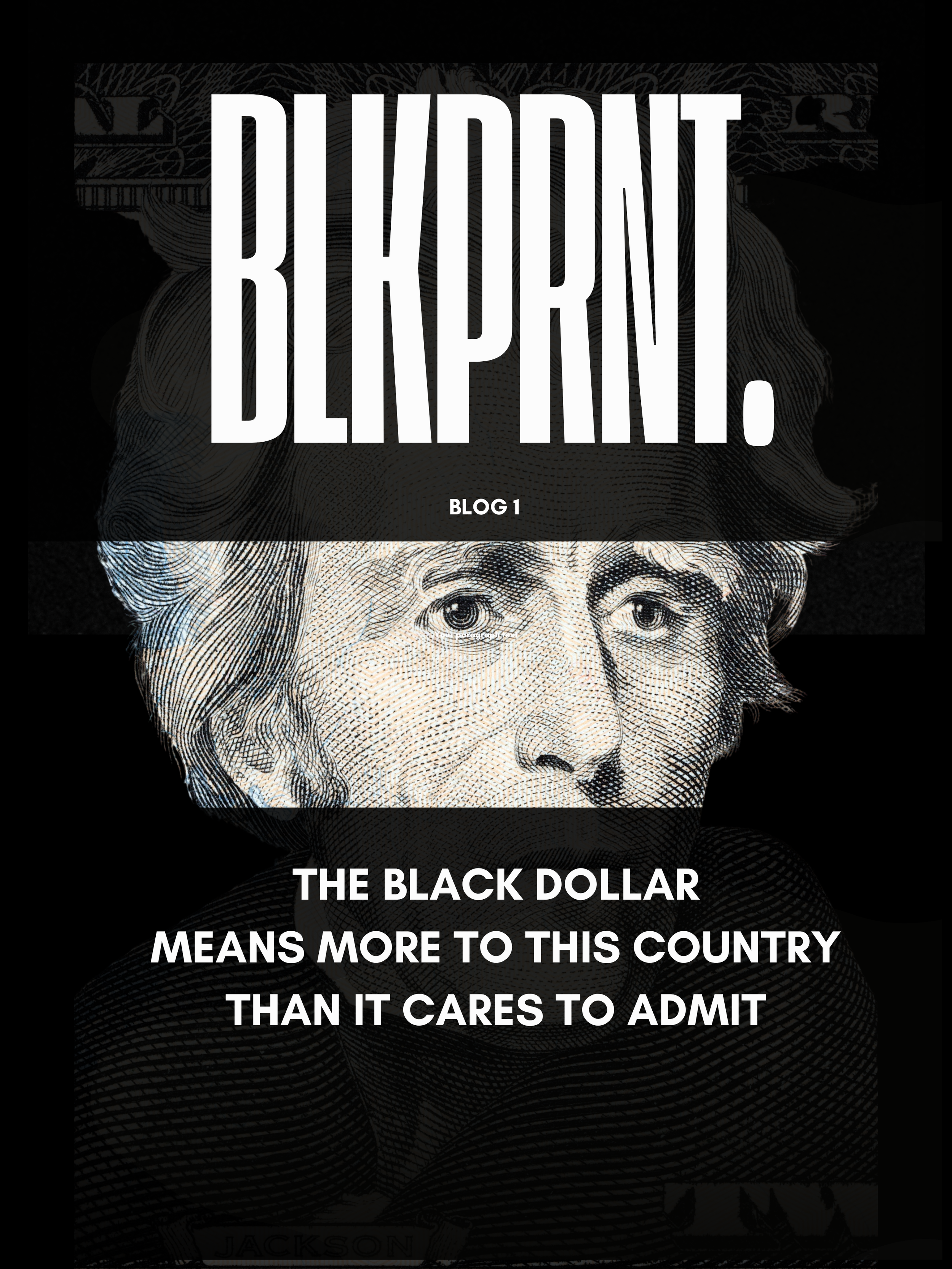
According to the mountain of consumer reports on black spending, our pockets run deep…everywhere except where it actually counts—inside our own communities.The reasons why our dollar struggles don’t require a magnifying glass or a think tank to decode. The scarcity of resources, paired with the overall decline of the national economy, makes it painfully clear how rarely our money circulates among us. The truth shows up in the numbers: Our community struggles the most to generate and maintain wealth. The Black Star Project reports that the lifespan of the black dollar is about six hours. Six. Hours. After that, it’s gone – usually into the hands of someone who isn’t investing back into us.
When circulation collapses, so does everything connected to it. Black-owned businesses can’t grow. Job opportunities shrink. Reinvestment evaporates. Yet witnessing the irony coil around this narrative like a snake is cruel: Our buying power seems incredibly strong, and it’s projected to reach $2.1 trillion this year.
Which leads to the question no one likes to ask out loud:
If we’re so damn smart – since we got our degrees and all – why aren’t we investing our money where it truly matters? If we know that withholding our economic presence is where “they” feel it the most, why aren’t we choosing the path that rebuilds us?
The reasons are layered and numerous.
Black-owned businesses exist, but the local support in their respective niches can run bare. And because our dollar moves the quickest, it often ends up in non-black retailers across the country. Even though black businesses do exist, many people live “across the way,” many miles away from their closest option. So instead of driving 10-20 miles to a black-owned gas station, folks just go to the white-owned gas station across the street, which also has a Chinese restaurant selling Soul food. Financial hemorrhaging via convenience isn’t the only thing that can stunt our wallets.
The outcomes in the attempt to keep us financially impaired were never by our design. It was systematically constructed that way to keep African Americans from doing everything in their power to remain upright in a country that has constantly knocked us down. During the Second Industrial Revolution (and even long before), white-owned businesses existed and profited from our labor, as well as capitalizing on our dollars. Businesses that were operating in white marginalized spaces never cared for our presence, but respected our money (the only other language they ever bothered to understand aside from English, mind you).
Let’s give some more perspective for those who claim this phenomenon doesn’t exist:
Little Negro Jimmy always had to go around the back of the parlor to get his ice cream, but white Ms. Holly always got hers at the counter in the front. What’s the fucked up part about this (very real) scenario? Getting treated like a stray dog over a product that yielded the same price.
Our efforts to defy the caste system by creating our own economy had successful results (The National Negro Business League, Black Wall Street), but the battle to amplify them to their full potential was a long one. The caste system was the reason black-owned businesses stayed relatively small during that time. The laws of Jim Crow didn’t allow them to expand their business to other racial groups to gain more capital. Financial institutions rarely offered them financing, credit, and insurance to keep their business as polished as the white ones that would capitalize on both racial groups during times of segregation. Despite all these restrictions, our efforts to build led to even more breakthroughs that helped solidify and strengthen our communities and create our own generational wealth.
Fast forward to today, and most of us already understand the existing problems. We know that many of the products we rely on are created by people who don’t care about our health or well-being. But convenience makes the choice for us, and convenience has never been neutral. For us, it can be destructive. We are a population of roughly 48.2 million. There are around 3 million black-owned businesses, generating about $206 billion each year. Our dollar has the shortest lifespan, yet we outspend the average American consumer in category after category, social media, beauty, tech, you name it. And just like that disappearing dollar, those numbers don’t add up. And they need to.
Throughout history, we’ve already proven what we can build and what we can do. We’ve already seen what happens when our money stays home. And we’ve seen what we can do in the face of adversity.
The only question left is whether or not we’re brave enough to try again.
